I remember my family’s first motorhome trip. It was the 90s, and our rented RV was a beige box on wheels that smelled of old carpet and diesel. The “kitchen” was a two-burner stove that rocked violently with every pothole, and “handling” meant white-knuckling the steering wheel while semi-trucks blew us around on the interstate. It was an adventure, but luxury it was not.
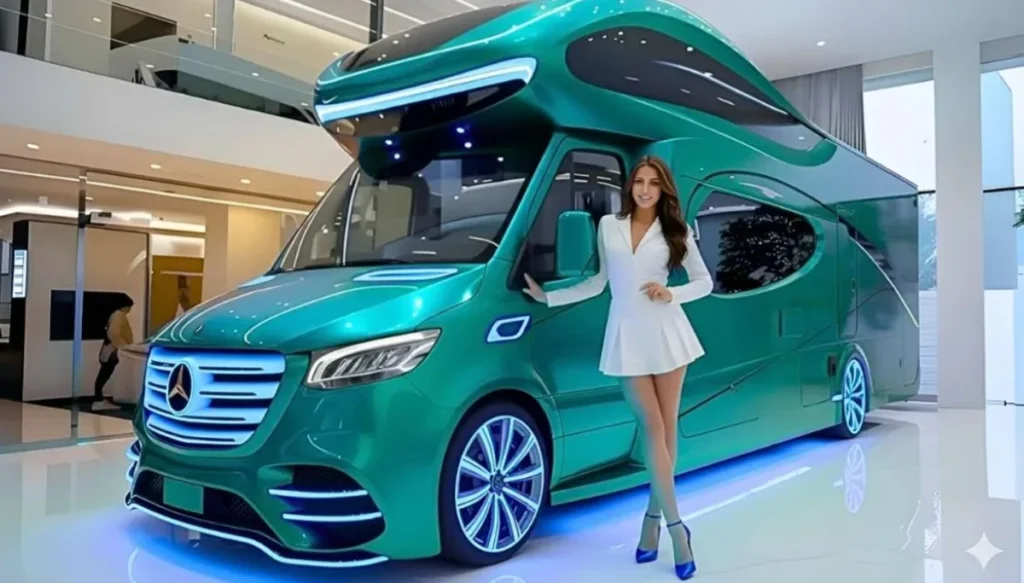
That memory flashed through my mind when I started digging into the buzz around the anticipated 2026 Mercedes-Benz luxury motorhome. Let’s be clear: this isn’t your grandfather’s Winnebago. What Mercedes seems to be conceptualizing is less of a camper and more of a rolling penthouse suite, aimed squarely at travelers for whom the journey needs to be as impeccable as the destination. As someone who’s seen both sides of the RV life, the evolution is nothing short of staggering.
The Heart of the Experience: Living Space Reimagined
Forget cramped quarters and plasticky finishes. The promise of this motorhome lies in its interior philosophy. Mercedes isn’t just slapping their logo on a generic coach. They’re applying the same design principles found in their top-tier sedans and SUVs.
The goal appears to be creating a calm, uncluttered sanctuary. Imagine stepping inside to an environment that feels open and airy, not like you’re trapped in a well-appointed cave. This is achieved through intelligent use of space, likely with large, panoramic windows that bring the outside in and strategic lighting that mimics natural daylight cycles. The materials matter—think of the soft, supple leather from an S-Class, the cool touch of real metal trim, and durable yet elegant wood veneers on the cabinetry. It’s the difference between a place you sleep and a space where you truly unwind.
The layout is reportedly smart, not just spacious. A lounge area that seamlessly converts from a social space to a dining room to a sleeping area is a must. The kitchen (or “galley” in RV terms) is expected to move beyond a simple microwave-and-sink combo. We’re looking at proper, integrated appliances, solid-surface countertops, and ingenious storage that makes living on the road for weeks not just possible, but pleasant. The bedroom isn’t an afterthought bunk over the cab; it’s a dedicated, private retreat with a focus on premium bedding and serious sound insulation, ensuring you actually wake up rested, not just parked.
The Magic Trick: Making it Drive Like a Mercedes
Here’s the real kicker for anyone who’s ever dreaded piloting a large RV: Mercedes is promising this won’t feel like driving a lumbering bus. This is where their engineering pedigree is supposed to pay dividends.
The rumored powertrain options—a robust turbo-diesel or a potentially groundbreaking hybrid system—aren’t just about power. They’re about refinement and efficiency. The dream is a motorhome that accelerates and merges onto highways with confident ease, not strained, noisy desperation. The hybrid concept is particularly intriguing, offering the potential for silent, emissions-free power at campsites, letting you run the climate control or appliances without a generator’s racket.
More importantly, it has to handle. Mercedes is known for composed ride quality and precise steering. Translating that to a vehicle this size is a monumental task, but if anyone has the suspension and chassis technology to do it, they do. The idea is to reduce the constant minor steering corrections and the “swaying boat” feeling that fatigues drivers on long, windy roads. Advanced driver-assistance systems, like a truly smart adaptive cruise control and lane-keeping assist, won’t just be safety features; they’ll be fatigue-fighting tools, making a 300-mile driving day feel manageable, not marathon.
The Seamless, Smart Home (Wherever You Park)
Tech in older RVs was an assortment of clunky separate systems: one control for water, a panel for lights, a thermostat for heat. The 2026 Mercedes vision points to a unified, intuitive ecosystem.
A fully digital cockpit for the driver is a given, integrating navigation tailored for a large vehicle’s dimensions, real-time traffic, and points of interest. But the real lifestyle upgrade is in the living space. Imagine a single, smart system—controllable via a sleek touchpad or even your phone—that manages the climate, ambient lighting, audio, security, and energy usage. You could warm up the floor on a chilly morning, set the lights to a soft “evening” mode, and check your freshwater tank level without getting out of your seat.
This connectedness extends outside. Integration with campground networks for booking and site access, advanced monitoring of solar panel input and battery storage (if equipped), and robust connectivity solutions for remote work are no longer futuristic perks—they’re expected essentials for the modern luxury nomad.
Who Is This For? And Is It Even Real?
Let’s address the elephant in the room. As of my research, Mercedes-Benz has not made an official announcement for a 2026 luxury motorhome of this specific description. The information circulating online, including on sites like the one you referenced, appears to be a blend of informed speculation, industry trends, and consumer wishes. It’s a concept, a prediction of where the market could go.
So, who is this hypothetical vehicle for? It’s not for the budget-weekend camper. This is for the discerning empty-nester or remote professional who views travel as a permanent possibility, not a two-week vacation. It’s for someone who wants the autonomy of the open road but refuses to compromise on design, comfort, and performance. They might be trading a second home or a yacht for this—a single asset that enables endless exploration without the jet lag.
Your Practical Questions, Answered
- Q: When can I actually buy one?
A: There is no official release date, as the vehicle hasn’t been officially confirmed by Mercedes. If it enters production, announcements would likely come 12-18 months before models hit dealers. - Q: What would something like this cost?
A: Given the Mercedes-Benz badge and the proposed level of luxury, expect a price tag deep into the six-figure range, easily competing with high-end Class A motorhomes from brands like Newmar or Prevost. - Q: Is a hybrid system practical for a large motorhome?
A: It’s the biggest technical question. The benefits for campsite comfort and efficiency are huge, but providing enough power and range for both driving and living would require a very advanced, likely expensive, battery system.
The Bottom Line: A Compelling Vision of Travel’s Future
Whether this exact Mercedes motorhome materializes in 2026 or not, the concept it represents is very real and already taking shape. The market is moving decisively away from clunky, utilitarian RVs toward sophisticated, driver-friendly mobile residences.
The promise of the “2026 Mercedes” is the ultimate fusion: the wanderlust of the open road married to the unshakeable comfort and prestige of a luxury home. It suggests a future where you don’t have to choose between seeing the world and living well. You can simply turn the key, and your perfectly appointed world comes with you.
And for someone who remembers that beige, rattling box from the 90s, that future can’t come soon enough. It turns the daunting question of “Where should we go next?” into the most exciting one you can ask.